Exercising During Ramadan: A Practical Fasting Guide
When to train, how hard, and what to eat at iftar and suhoor: a practical guide to staying fit during Ramadan safely, with a sample week and hydration tips.
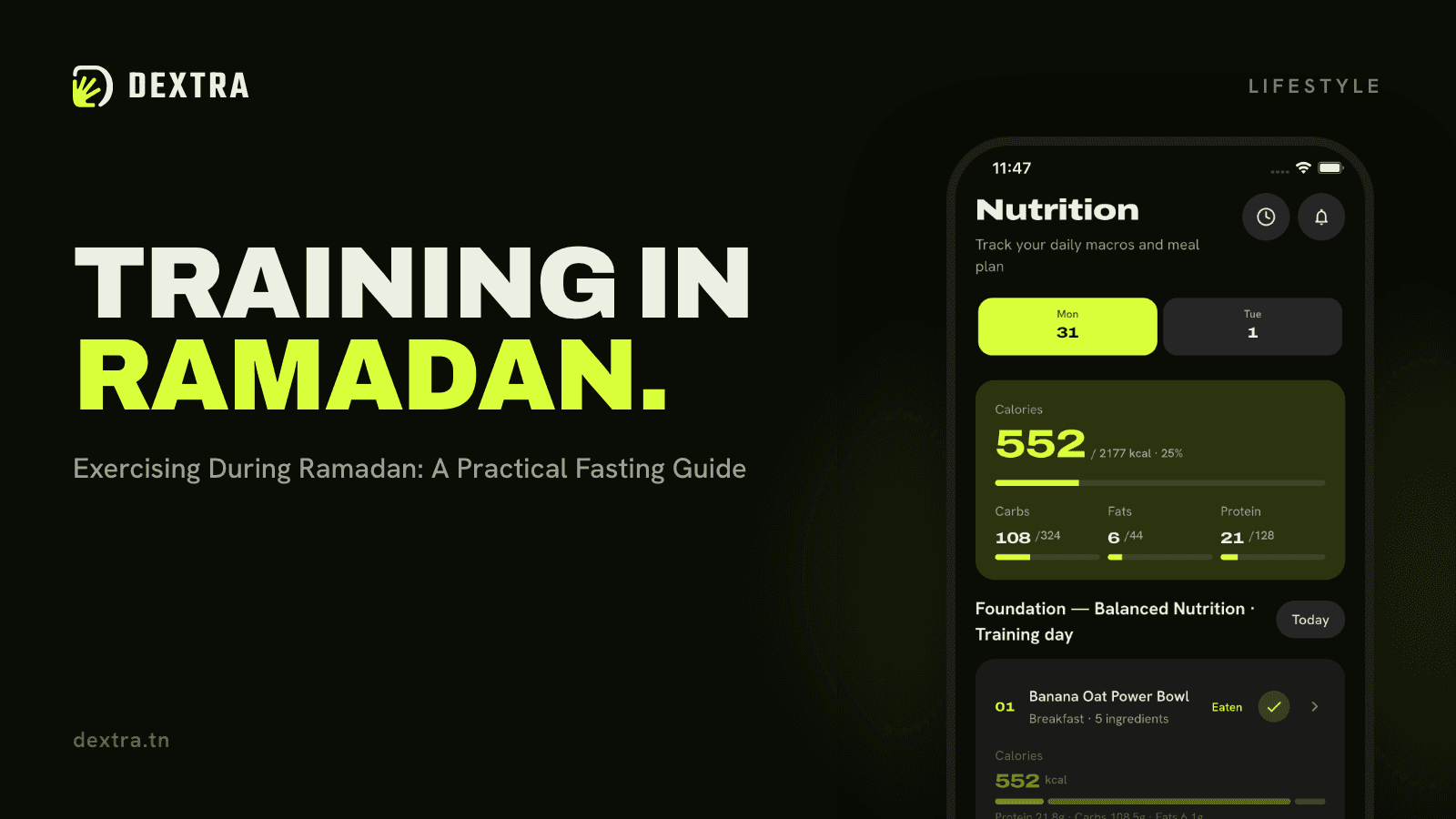
Ramadan and training: change the goal, not the habit
During Ramadan the body runs on less water, fewer meals and often less sleep. Trying to set personal records under those conditions makes little sense. The realistic goal for the month is simple: maintain what you have built, keep the habit of moving, and arrive at Eid in good shape rather than exhausted.
In practice, that means accepting slightly lighter weights, slightly slower runs and shorter sessions. This is not a step backwards: a complete four-week break costs far more than a month of consistent maintenance on reduced volume.
If you have a chronic illness, diabetes, a heart condition or you are pregnant, ask your doctor before training while fasting.
When to train: the three possible windows
There is no perfect time, only the one that fits your day best.
Just before iftar (60 to 90 minutes before breaking the fast)
- Pros: you eat and drink right after, recovery starts without delay, and the session does not disturb the family evening.
- Cons: this is when hydration is at its lowest and energy at its weakest. Keep this window for light to moderate sessions, never for very intense efforts.
1 to 2 hours after iftar
- Pros: you have drunk, eaten a first meal, and you can drink during the workout. This is the only window where a genuinely serious strength session is reasonable.
- Cons: you need a light iftar so you are not training on a full stomach, and the session cuts into the evening and into tarawih.
Before suhoor (or right after it)
- Pros: the body is rested, the air is cool, and you can eat and drink after the session.
- Cons: you have to get up early when nights are already short. This window suits people who go to bed early after iftar.
The right choice depends on your schedule, your work and your sleep. Many people alternate: light sessions before iftar on weekdays, a fuller session after iftar at the weekend.
Intensity, volume, and strength versus cardio
The general rule during Ramadan: cut volume by 30 to 50 percent and keep intensity moderate. In practice:
- Go from 4 or 5 sessions a week to 3 or 4 shorter ones (30 to 45 minutes).
- In strength training, keep loads close to your usual weights but reduce the number of sets. Two well-executed sets beat four rushed ones.
- Finish every set with 2 or 3 repetitions in reserve. This is not the month to train to failure.
- Favour the basic movements: squats, lunges, push-ups, pull-ups, rows, core work. They preserve the essentials in little time.
- Lengthen the warm-up and shorten the end of the session.
If you train while fasting, drop down one more notch. A session that leaves you fresh is a success; a session that leaves you shaking is a mistake.
Strength training is the priority if your goal is to keep your muscle mass. It needs little water compared with prolonged cardio, and the rest between sets lets you manage the effort. Schedule your heaviest sessions after iftar.
Cardio is still useful, but change the format. While fasting, choose brisk walking, easy cycling or a 20 to 30 minute mobility session. Long runs in the sun, very intense intervals and extended team sports in the middle of the afternoon should be avoided during the fast: heavy sweating with no way to drink is the main cause of feeling unwell.
Hydration: the real priority of the month
Between iftar and suhoor you have a few hours to cover the whole day's water needs. Drinking two litres in one go at iftar does not work: the excess is eliminated quickly. The effective strategy is to spread it out.
- A large glass of water when breaking the fast, with the dates.
- A glass every 30 to 45 minutes through the evening.
- One or two glasses at suhoor, without overdoing it so you do not spend the night getting up.
- A soup (chorba, vegetable soup) counts as water and provides salt, which is useful after a day of sweating.
- Limit very sugary drinks and sodas: they quench thirst poorly and add empty calories. Coffee and tea are fine in moderate amounts, preferably not right before bed.
On training days, add an extra half litre spread across the evening, and watch the colour of your urine: pale is good; dark means drink more.
Eating well at iftar and suhoor
The Tunisian Ramadan table is generous, and that is an advantage: you only need to choose and portion.
Iftar in two stages. Start with two or three dates, a glass of water or milk, then a chorba. Take a 15 to 20 minute break (the maghrib prayer falls conveniently here). This pause prevents overeating and lets digestion start gently. Then the main course: a protein source (chicken, fish, lean meat, eggs, legumes), a portion of whole-grain starches or pulses (brown rice, whole-grain bread, chickpeas, lentils), and a large salad (mechouia, Tunisian salad, cooked vegetables).
Brik, in moderation. It is not forbidden, but it is a fried food. An egg brik now and then is no problem; a brik every evening, plus pastries, plus sugary drinks, and the month turns into a period of fat gain rather than maintenance. Ideally, bake the brik in the oven or limit it to a few evenings a week.
Suhoor, the meal that carries the day. Do not skip it, especially on training days. Build it around slow carbohydrates and protein: oats or whole-grain bread, yoghurt or milk, eggs, fresh white cheese, a few dried fruits, a banana. Avoid very salty dishes that make you thirsty and fast sugars that trigger hunger by mid-morning.
After the evening session, a small serving of protein (yoghurt, milk, eggs, a portion of chicken left over from iftar) helps recovery.
Sleeping despite broken nights
Sleep is often the forgotten piece of Ramadan, yet it is what determines the energy you bring to your sessions. A few principles:
- Aim for a total of 7 hours per 24 hours, even if it is split: for example 5 hours at night and a 1 to 2 hour nap in the afternoon.
- Set a bedtime and stick to it, even when the evening is pleasant.
- Do not train too late: an intense session at midnight delays falling asleep.
- Cut screens and very heavy meals in the hour before bed.
- If you are very tired, skip the session and sleep: one extra rest day changes nothing.
Warning signs to respect
Training while fasting means listening to your body honestly. Stop the session immediately if you notice:
- dizziness, blurred vision or a darkening of your vision;
- shaking, cold sweat or confusion;
- nausea or strong cramps;
- palpitations or unusual shortness of breath;
- an intense headache.
Sit down somewhere cool and wait. If the symptoms persist or keep coming back, see a doctor: health comes before the fast and before training.
Getting back after Eid, and a sample week
After Eid, resist the urge to make up for the month in a single week. Plan 7 to 10 days of gradual return: first restore your sleep and hydration rhythm, then bring volume back to 70 percent, then to 100 percent. The weights will come back quickly.
Here is a sample week for an active person who normally trains four times a week:
- 1.Monday: brisk 30 minute walk before iftar.
- 2.Tuesday: upper-body strength, 35 minutes, 1.5 hours after iftar.
- 3.Wednesday: rest or 15 minutes of mobility.
- 4.Thursday: lower-body strength, 35 minutes, 1.5 hours after iftar.
- 5.Friday: rest.
- 6.Saturday: full-body session, 45 minutes, after iftar or before suhoor.
- 7.Sunday: easy walk or cycle, 30 to 40 minutes before iftar.
Adjust to your energy that week; the aim is to finish the month healthy without losing your habits.
If you would like a personalised programme that fits your Ramadan schedule, Dextra's certified coaches, based in Tunisia, adjust your sessions and nutrition follow-up during the month, with weekly check-ins and in-app messaging. Dextra is free on iOS and Android, at dextra.tn.
Related guides
Ready to start your journey?
Download Dextra and get a personalized plan built for your goals.
Download Dextra