Sports Nutrition With Tunisian Foods: Eat Local, Progress
Eggs, tuna, couscous, dates and olive oil: learn how to build training-day and rest-day plates from everyday Tunisian foods, with no calorie counting required.
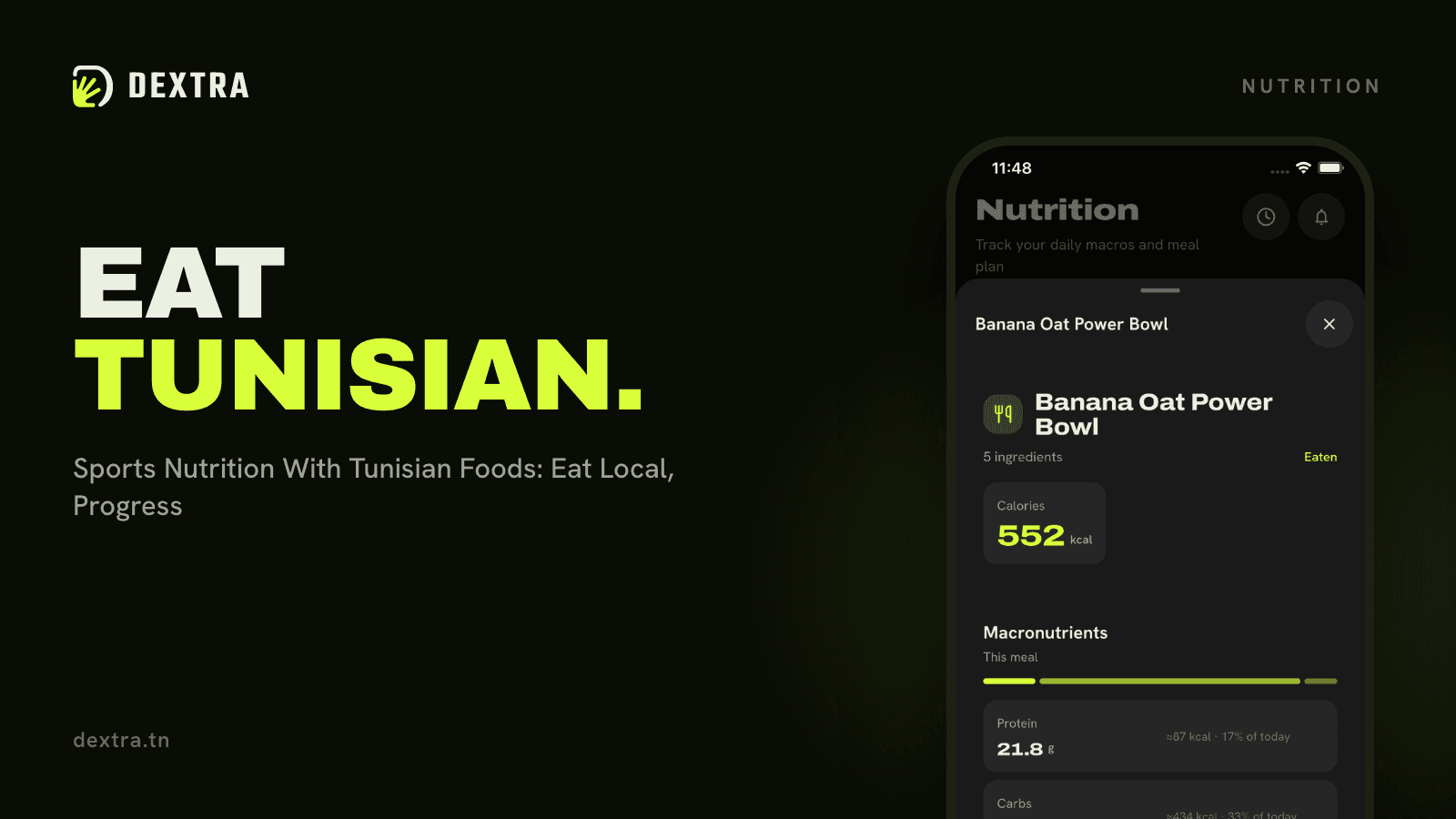
You do not need imported powders or exotic ingredients to make progress in the gym. The local market, the corner grocer and your grandmother's kitchen already hold almost everything a training body asks for. The real challenge in Tunisia is not finding the right foods, it is combining them at the right time and in the right amounts.
In this article we go through the proteins, carbohydrates, healthy fats and vegetables you can find anywhere in the country, then put them together into concrete plates for training days and rest days. No calorie tables, no unnecessary jargon.
Tunisian protein: far more than chicken
Protein repairs and builds muscle after effort. The good news is that Tunisia is full of it, often at a reasonable price.
- Eggs: versatile, cheap and available everywhere. Hard-boiled in a salad, scrambled in the morning, or in an ojja at night.
- Chicken: the classic reference. Grilled, roasted or simmered with vegetables, it fits any meal.
- Tuna and sardines: canned tuna is handy for quick meals, and fresh grilled sardines are one of the best-value foods in the country.
- Lentils and chickpeas: the base of lablabi and so many traditional dishes. Rich in plant protein and fibre, they keep you full for hours.
- Milk, yoghurt and fresh cheese: easy to add as a snack or at breakfast, especially rayeb and local white cheese.
The idea is not to pick a single source but to vary across the week. A day with eggs in the morning, chicken at lunch and lablabi at dinner already covers your needs very well.
Carbohydrates: the fuel for your sessions
Carbohydrates have a bad reputation, and it is undeserved. For someone who trains, they are the main fuel for intense sessions. The trick is to favour whole, minimally processed versions.
- Couscous: the national dish and an excellent staple carbohydrate, especially with vegetables and a protein source.
- Wholegrain bread: choose it over white bread when you can, it keeps you full longer.
- Pasta: a family-meal classic, perfect the night before a hard session.
- Potatoes: baked or boiled rather than fried, they nourish without weighing you down.
- Dates: Tunisia's natural sugar par excellence. Two or three dates before a session give a quick lift.
Rice, mloukhia with bread, chorba with vermicelli: traditional cooking is full of carbohydrates that are easy to fit into a training week.
Healthy fats and vegetables
Tunisian olive oil is renowned around the world, and you probably already have it in your kitchen. A drizzle over your salad or vegetables is enough; there is no need to drown the plate. Almonds and walnuts, a small handful a day, round things out as a snack.
For vegetables, Tunisian salad (tomato, cucumber, onion, pepper) and slata mechouia are perfect bases to accompany any meal. Seasonal market vegetables such as courgettes, aubergines, spinach, carrots, turnips and fennel cost less than imported produce and taste better. Aim for at least one portion of vegetables at every main meal.
Build your plate with your hands
Forget the kitchen scale. Your hands are a measuring tool that is always available and proportional to your body size.
- Protein: a portion the size of your palm (without fingers) per meal.
- Carbohydrates: a portion the size of your closed fist, adjusted to the day.
- Vegetables: two open handfuls, with no real limit.
- Fats: the size of your thumb for oil, almonds or walnuts.
On training days, keep one to two portions of carbohydrates per meal and add a fast carbohydrate source around the session, such as dates or a banana. On rest days, cut carbohydrates back to one portion or less and fill the space with more vegetables and a slightly more generous portion of protein. You do not need to count: watch your energy, your hunger and your recovery, then adjust from one week to the next.
Before and after training, Tunisian style
You do not need special products to fuel your training properly. Everyday dishes do the job very well.
Before the session (one to two hours before):
- A slice of wholegrain bread with fresh cheese and a few dates.
- A light bowl of lablabi at lunch if you train in the late afternoon.
- A yoghurt with a handful of almonds and a banana if you are short on time.
After the session (within two hours):
- Vegetable couscous with grilled chicken.
- Grilled sardines, baked potatoes and Tunisian salad.
- Ojja with eggs and wholegrain bread.
- A plate of tuna pasta with slata mechouia.
What matters after effort is getting a protein and a carbohydrate into the same meal. The rest is detail.
Drink enough when it is hot
In Tunisia, the heat makes hydration a priority, not an option. Drink regularly throughout the day, not only when you feel thirsty. Bring a bottle to the gym or wherever you train, and drink before, during and after the session.
On very hot days or during long sessions, a pinch of salt in your next meal and water-rich foods (watermelon, melon, cucumber, tomato) help replace what you lose through sweat. Water remains your main drink; mint tea is a pleasure, not a substitute.
Cut back without deprivation, eat well without overspending
No food is forbidden. But some, eaten every day, hold back your progress without you noticing.
- Fried food: fricassé, brik, chips, keep them for occasions rather than daily life.
- Sugar in tea: two or three well-sweetened glasses a day adds up. Cut back gradually, half a sugar cube at a time.
- Sodas: swap them for sparkling water with lemon if you like the bubbles.
- Daily pastries: mlawi at breakfast or an afternoon pastry, enjoy them at the weekend rather than every day.
Cutting back is not cutting out. A family feast does not cancel a week of effort.
And sports nutrition does not have to be expensive. Eggs, lentils, chickpeas and sardines are among the cheapest proteins in the country. Buy your vegetables at the market late in the morning when prices drop, and favour whatever is in season. Cook in bulk at the weekend: a pot of couscous or lablabi covers several days. Finally, large cans of tuna cost less per kilo than small individual ones.
A sample day
Here is what a training day can look like, with no scale and no calculator:
- 1.Breakfast: two eggs, a slice of wholegrain bread, fresh cheese, lightly sweetened tea.
- 2.Snack: a yoghurt and two dates.
- 3.Lunch: vegetable couscous with chicken, Tunisian salad with a drizzle of olive oil.
- 4.Before training: a banana and a handful of almonds.
- 5.Dinner: grilled sardines, baked potatoes, slata mechouia.
On rest days, drop the pre-training snack and reduce the couscous or potato portion in favour of more vegetables.
If you have a medical condition, speak to a doctor or dietitian before changing how you eat. And if you want a plan adapted to your schedule, your tastes and your budget, Dextra's certified coaches, based in Tunisia, can support you with personalised nutrition follow-up directly in the app, free on iOS and Android.
Related guides
Ready to start your journey?
Download Dextra and get a personalized plan built for your goals.
Download Dextra